

Astell&Kern PD5 Review: The Best Mid-Range Android Music Player?
Astell&Kern has always made beautiful music players, but the cheaper ones came with two annoying catches. The battery didn’t last very long, and the software felt more limited than a normal Android phone. The new Astell&Kern PD5 is the company’s answer to both. It replaces the A&norma SR35, doubles the DAC count to eight, promises…
Astell&Kern PD5 review
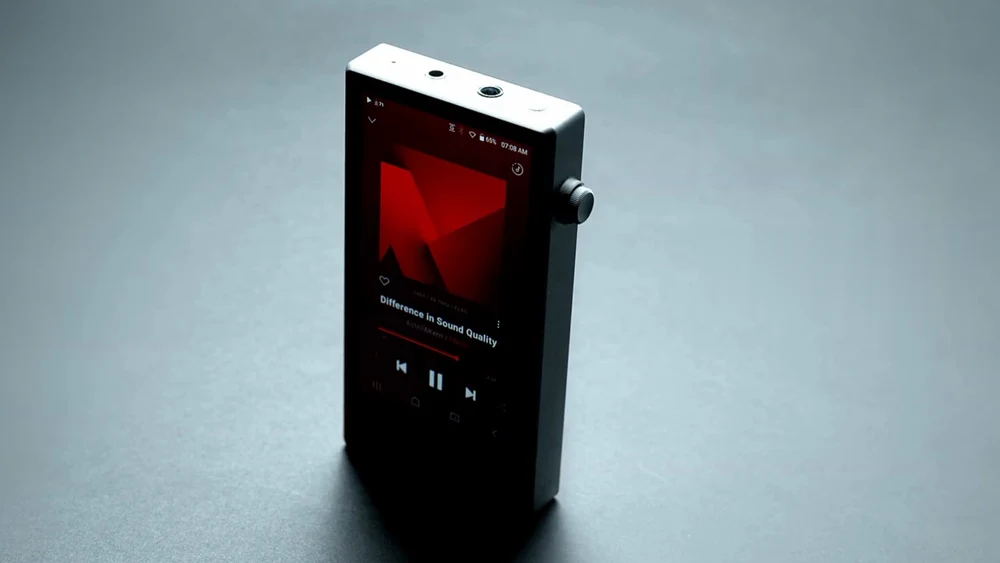
Astell&Kern has always made beautiful music players, but the cheaper ones came with two annoying catches. The battery didn’t last very long, and the software felt more limited than a normal Android phone. The new Astell&Kern PD5 is the company’s answer to both. It replaces the A&norma SR35, doubles the DAC count to eight, promises up to 28 hours of playback and runs Android, so Spotify, Apple Music, Tidal and Qobuz all just work. At around $950, that’s a lot of player for the money, at least on paper. So is it the mid-range DAP to buy right now? Let’s have a look.
Quick answer: The Astell&Kern PD5 is a $950 Android music player with eight Cirrus Logic CS43198 DACs, 3.5mm and 4.4mm balanced outputs, and up to 28 hours of battery in Quad-DAC mode. It’s the best mid-range Android DAP for IEM owners who want long battery life and streaming apps. It isn’t the one for big, power-hungry headphones. We rate it 4.5 out of 5.
Astell&Kern PD5 at a Glance
| Price | $950 (Astell&Kern); ¥176,000 in Japan |
| Released | October 2026 |
| DACs | 8 × Cirrus Logic CS43198 (Quad-DAC or Octa-DAC mode) |
| Outputs | 3.5mm unbalanced, 4.4mm balanced |
| Output level | Quad: 3Vrms / 6Vrms balanced. Octa: 4Vrms / 8Vrms balanced |
| Playback | PCM up to 32-bit/384kHz, native DSD256 |
| Screen | 4.1-inch, 720 × 1280 |
| Storage | 64GB, plus microSD up to 1.5TB |
| Battery | 4,000mAh, up to 28 hours (Quad-DAC), about 2.5 hours to charge |
| Wireless | Wi-Fi 5 dual-band, Bluetooth 5.3 with LDAC, aptX HD and LHDC |
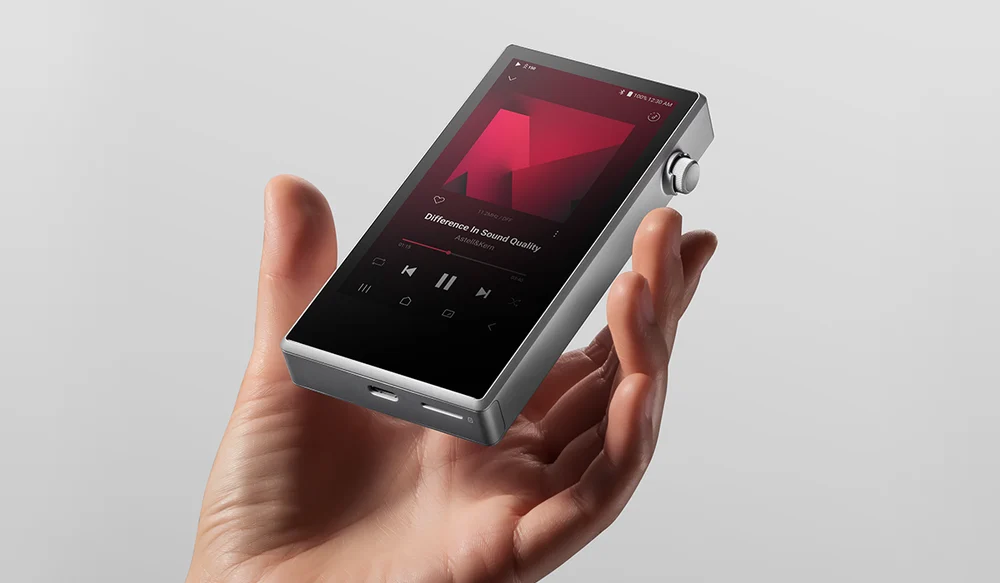
| Size and weight | 69.7 × 119.7 × 16.1mm, about 198g |
Design and Build: Small, Heavy in the Good Way
The PD5 is properly pocketable. At just under 12cm tall and 16mm thick, it’s shorter than most phones, though at 198g it has that dense, solid feel you only get from a machined aluminium body. Astell&Kern’s angular styling is all here, including the slanted edges and the signature volume wheel on the right side. If you’ve never used one, the wheel is honestly one of the nicest things about these players. You can turn the volume up or down in your pocket without even looking.
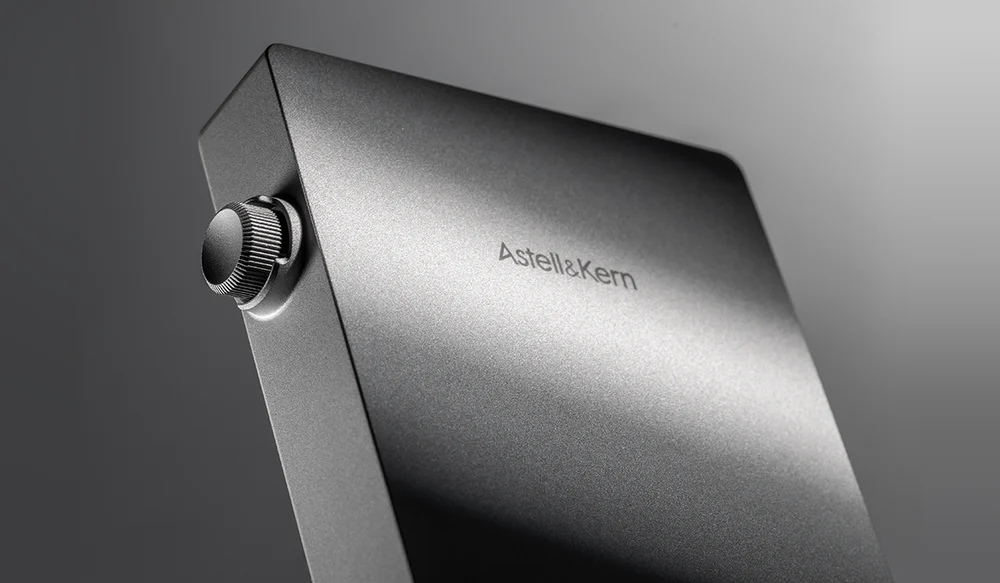
The screen is a 4.1-inch 720p panel. That’s small and low-resolution next to any phone, and you’ll notice it when you browse long playlists or type a search. For a music player I don’t mind too much, because you’re mostly looking at album art and a play button. Only one colour, silver, is listed at launch, and Astell&Kern sells a TPU case if you want to keep the edges scratch-free.
There’s a 3.5mm jack and a 4.4mm balanced jack on top, a USB-C port for charging and for using the PD5 as a DAC with your computer, and a single microSD slot. Just note that the 4.4mm socket is the five-pole type, so older four-pole cables won’t fit properly.
Eight DACs and Two Drive Modes
Here’s the headline feature. The PD5 uses eight Cirrus Logic CS43198 DAC chips, twice as many as the SR35 it replaces. You don’t have to run all eight all the time, though. A setting called Dual Drive Mode lets you choose between two personalities.

Quad-DAC mode uses four chips. It’s the battery saver, and it’s the mode behind that 28-hour claim. Output is 3Vrms unbalanced and 6Vrms balanced, which is plenty for in-ear monitors and most easy-to-drive headphones.
Octa-DAC mode wakes up all eight and raises the output to 4Vrms unbalanced and 8Vrms balanced. Astell&Kern pitches this as the “everything” mode for focused listening, with more headroom and control. Battery life drops, although the company hasn’t given an official figure for it.
On paper the measurements are excellent. Astell&Kern quotes a signal-to-noise ratio of up to 129dB from the balanced output, distortion of 0.0006% and crosstalk as low as −147dB. Numbers like these won’t tell you whether you’ll love the sound, but they do tell you there’s very little noise or hiss to get in the way, which matters a lot with sensitive IEMs. The low output impedance of 0.6 ohms (1.2 ohms balanced) is good news for multi-driver IEMs too, as it keeps their tuning as the maker intended.
EnviroTune and the Other Sound Features
The PD5 debuts a feature called EnviroTune. It uses the built-in microphone to listen to the noise around you and adjusts the sound to make up for it, so details that a bus or a café would normally drown out stay audible. It’s a clever idea for a player built to be carried around. It does have limits though. It works with PCM music up to 24-bit/192kHz, so it switches off for higher-resolution files and DSD.
There’s plenty more to play with. You get four DAC filters, a Crossfeed option that blends the channels a little so headphones sound more like speakers, ReplayGain to keep the volume the same across albums, and Digital Audio Remaster (DAR). DAR upsamples PCM to 352.8kHz or 384kHz and lower-rate DSD to DSD128, and you can switch it off if you prefer your files untouched.
Software and Streaming
This is the part that will matter most to a lot of people. The PD5 runs Android with an octa-core processor, so you can install streaming apps instead of being stuck with whatever the maker supports. Tidal, Spotify, Qobuz, Amazon Music and Apple Music are all on the table. It’s also Roon Ready and supports Qobuz Connect, so you can control playback from your phone or computer while the PD5 does the listening work.

Wi-Fi is dual-band, and Bluetooth 5.3 supports LDAC, aptX HD and LHDC if you want to use wireless headphones. It can also work as a Bluetooth receiver, so you can stream from your phone into the PD5 and listen through its wired outputs. Astell&Kern hasn’t said which Android version or how much RAM the PD5 has, so I’d keep expectations modest for heavy multitasking. As a dedicated music device it should be more than enough.
Battery Life
Battery life is where the PD5 makes its biggest leap. Astell&Kern rates it at about 28 hours of FLAC playback (16-bit/44.1kHz) in Quad-DAC mode with the screen off. That’s a test done in kind conditions, and streaming over Wi-Fi or switching to Octa-DAC mode will cut it down. Even so, it’s a huge improvement for an Astell&Kern player and comfortably beats a lot of Android DAPs around this price. A full charge takes about two and a half hours with a USB-C PD 3.0 charger.
Who Should Buy the PD5?
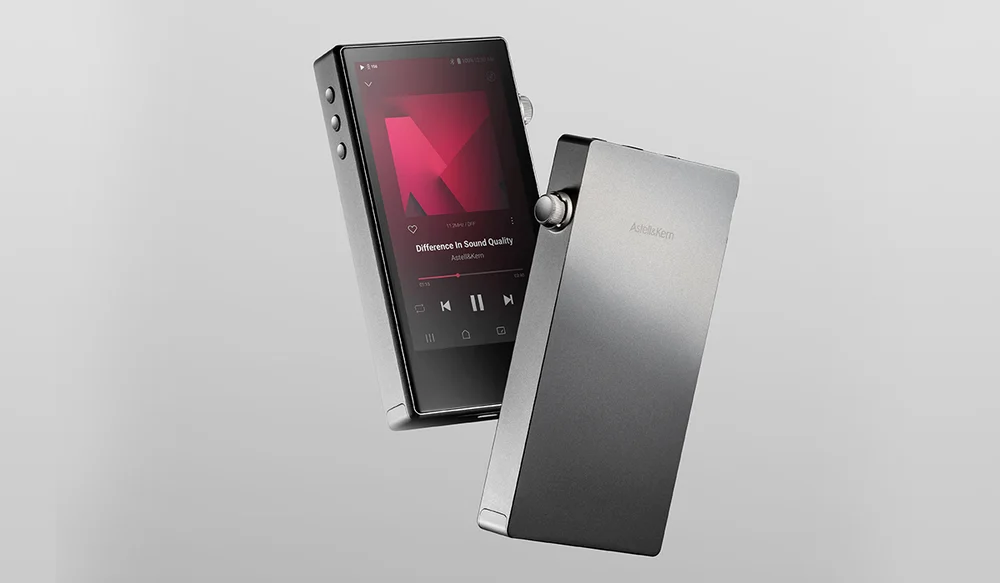
The PD5 makes the most sense if you listen on IEMs or easy headphones, use streaming apps every day, and want a player that lasts several days between charges. Its clean, low-noise output and long battery suit commuters and travellers perfectly.
It’s a harder sell if you own big planar or high-impedance headphones. 8Vrms balanced is decent, but players like the iBasso DX270 and FiiO M27 have much more power on tap for those. The small 720p screen and 64GB of built-in storage are also a step behind some rivals, though a microSD card fixes the storage side cheaply. If you’re comparing options, our guide to the best hi-res music players of 2026 puts the PD5 next to nine other players.
TheTechHacker Rating
Astell&Kern PD5
Outstanding
The Astell&Kern PD5 fixes the two things that used to hold back the brand’s cheaper players: battery life and software. With eight CS43198 DACs, a very clean and low-noise output, streaming apps and up to 28 hours of playback, it’s the mid-range Android player I’d pick for IEMs and everyday listening.
- Sound and specs4.6
- Battery life4.8
- Features and software4.5
- Design and build4.4
- Value for money4.2
What we like
- Eight CS43198 DACs with switchable Quad and Octa modes
- Up to 28 hours of battery in Quad-DAC mode
- Full Android with streaming apps
- Roon Ready and Qobuz Connect
- Very low noise and distortion, great for IEMs
- Compact machined aluminium body with a volume wheel
What we don't
- Small 4.1-inch 720p screen
- Only 64GB of built-in storage
- Not enough power for demanding planar headphones
- EnviroTune works only up to 24-bit/192kHz PCM
No ratings yet — be the first.
Where to Buy the Astell&Kern PD5
The PD5 is sold through Astell&Kern’s own store on Amazon and through authorised hi-fi dealers. Prices move around a bit between shops, so check before you buy.
Buy on Amazon Official Astell&Kern page
Frequently Asked Questions
How much does the Astell&Kern PD5 cost?
Astell&Kern lists the PD5 at $950, and most US dealers sell it for around $949 to $1,049. In Japan it launched on 17 October 2026 at ¥176,000.
Does the Astell&Kern PD5 run Android apps?
Yes. The PD5 runs Android, so you can install streaming apps such as Spotify, Apple Music, Tidal, Qobuz and Amazon Music. It’s also Roon Ready and supports Qobuz Connect.
How long does the PD5 battery last?
Astell&Kern rates the PD5 for about 28 hours of FLAC playback in Quad-DAC mode with the screen off. Octa-DAC mode and Wi-Fi streaming use more power, so real-world battery life will be shorter.
What is the difference between Quad-DAC and Octa-DAC mode?
Quad-DAC mode runs four of the eight CS43198 chips for longer battery life, with 6Vrms from the balanced output. Octa-DAC mode runs all eight for more headroom, raising the balanced output to 8Vrms.
Is the Astell&Kern PD5 better than the SR35?
The PD5 replaces the A&norma SR35 with twice the DACs (eight instead of four), a full Android system for streaming apps and much longer battery life. It costs more than the SR35 did at launch, so the SR35 can still be a good deal if you find it discounted.
Final Verdict
The Astell&Kern PD5 fixes the two things that used to hold back the brand’s cheaper players: battery life and software. With eight CS43198 DACs, a very clean and low-noise output, streaming apps and up to 28 hours of playback, it’s the mid-range Android player I’d pick for IEMs and everyday listening. It’s not the most powerful player at $950, and the screen feels dated, but as a pocket player you’ll actually carry every day, it’s very easy to recommend.
As an Amazon Associate, Thetechhacker earns from qualifying purchases. Prices and availability can change, so check the store before you buy.

More in Gadget Reviews

Zeblaze Crystal Smartwatch Review
In the wearable segment smartwatch’s is a next big thing. When it comes to a smartwatch category we see a number of brands, styles, and features justify its price. A Chinese watch brand Zeblaze is adopting all major steps to attract the customers. Like smartphones the smartwatch companies creating mid-range smartwatch’s affordable to budget oriented…
Aiwatch GT08+ Smart Watch Review
We have smart watches that can achieve anything on the go. They occupy a small place on our wrist and can do a lot of things which a smartphone doesn’t. A smart watch is used as a companion for your smartphone, acts as a standalone smartphone, remote camera capture, sleep monitor, pedometer, notifications from your…

D Watch 2 Smartwatch Review
We have covered a number of Smartwatch’s for our readers in the past. Most people associate smartwatch’s as a companion to their smartphones. A big reason is, we want a simplified technology piece to indulge our lifestyles. If you are looking for a simple in style, robust in performance and feature packed smartwatch meet D…
The week in tech, minus the noise.
New reviews, fixes and the stories that matter — once a week, straight to your inbox.
We only use your email to send the newsletter. Unsubscribe any time. See our privacy policy.
Comments