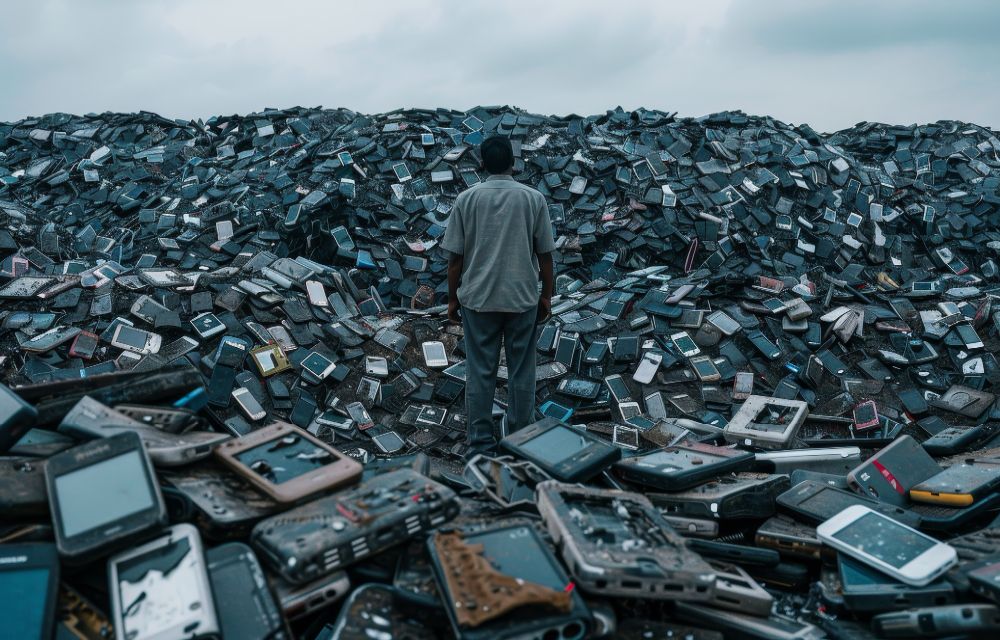
In our tech-driven world, new gadgets are constantly being released, making older models obsolete at an ever-increasing pace. This has led to a growing problem: electronic waste, or e-waste. But what if we told you that this e-waste is also a treasure trove of valuable materials, including metals like brass? This is where the concept of urban mining comes in, a modern-day gold rush that’s not only profitable but also environmentally friendly.
What is E-Waste?
E-waste is a term for electronic products that have become unwanted, non-working, or obsolete, and have essentially reached the end of their useful life. It includes everything from smartphones and laptops to refrigerators and televisions. According to a recent report by the United Nations, a record 62 million tonnes of e-waste was produced in 2022, and this is projected to rise to 82 million tonnes by 2030 [1].
The United States is one of the largest producers of e-waste. In 2019, the country generated almost 7 million tons of e-waste, but only 15% of it was recycled [2]. The rest ends up in landfills, where toxic materials can leach into the soil and water, or it’s shipped to developing countries where it’s often dismantled in unsafe conditions.
The Hidden Treasures in E-Waste
While e-waste is a significant environmental problem, it’s also a valuable resource. E-waste contains a variety of materials that can be recovered and reused, including precious metals like gold, silver, and platinum, as well as base metals like copper, aluminum, and iron. It also contains other valuable materials like plastics and glass.
One of the metals that is often overlooked in e-waste is brass. Brass is an alloy of copper and zinc, and it’s used in a variety of electronic components, including connectors, circuit boards, and wires. While the amount of brass in a single device may be small, the sheer volume of e-waste means that there is a significant amount of brass that can be recovered.
Urban Mining: A Modern-Day Gold Rush
Urban mining is the process of reclaiming raw materials from spent products, buildings, and other anthropogenic stocks. In the context of e-waste, it involves extracting valuable materials from discarded electronic devices. The World Economic Forum has highlighted urban mining as a key component of a circular economy, where waste is minimized and resources are reused [3].
Instead of mining for virgin ores, which is an energy-intensive and environmentally damaging process, urban mining allows us to recover these materials from the products we already have. This is not only more sustainable, but it can also be more profitable. The value of the raw materials in e-waste is estimated to be around €55 billion [4].
The Process of Urban Mining for Brass
The process of recycling e-waste to recover brass and other metals is a multi-step process that involves collection, sorting, dismantling, and shredding. Once the e-waste has been shredded into small pieces, magnets and other technologies are used to separate the different materials.
To recover brass, a process called hydrometallurgy is often used. This involves using a chemical solution to dissolve the copper and zinc from the e-waste. The dissolved metals can then be recovered from the solution and used to create new brass products. This is a complex process that requires specialized equipment and expertise. For those looking to recycle brass from other sources, it’s often best to work with a reputable Gardner brass recycling company in Austin with great prices.
Environmental and Economic Benefits
Urban mining of e-waste has significant environmental and economic benefits. By recovering valuable materials like brass, we can reduce the need to mine for virgin ores. This not only conserves natural resources, but it also reduces the environmental impact of mining, which can include habitat destruction, water pollution, and greenhouse gas emissions. In fact, recovering metals through urban mining can reduce greenhouse gas emissions by up to 80% compared to traditional mining [5].
From an economic perspective, urban mining creates new business opportunities and jobs in the recycling industry. It also provides a domestic source of raw materials, which can reduce our reliance on foreign imports. As the demand for electronic devices continues to grow, the importance of urban mining will only increase.
The Future of E-Waste and Urban Mining
As we move towards a more circular economy, urban mining will play an increasingly important role in how we manage our resources. Governments and businesses are starting to recognize the potential of e-waste as a valuable resource. For example, the U.S. Environmental Protection Agency (EPA) is actively promoting the recycling of e-waste and the development of urban mining technologies [6].
There are also a number of exciting new technologies being developed that could make urban mining even more efficient and effective. For example, researchers are exploring the use of bioleaching, which uses bacteria to extract metals from e-waste [7]. These innovations will help us to unlock the full potential of urban mining and create a more sustainable future.
For consumers, the message is clear: don’t just throw away your old electronics. By recycling your e-waste, you can help to conserve natural resources, protect the environment, and support the growing urban mining industry. Your old smartphone or laptop may be more valuable than you think.
References
[1] Global e-Waste Monitor 2024
[2] A Canary in an Urban Mine: Environmental and Economic Impacts of Urban Mining
[3] What is urban mining – and why do we need to do more of it?
[4] Chapter 9 Urban Mining of E-waste
[5] Urban Mining and Metal Recovery: Turning E-Waste into a …
[6] Cleaning Up Electronic Waste (E-Waste)
[7] Bioleaching: urban mining option to curb the menace of e-waste