

Human brain was mimicked by researchers with an algorithm and the results are not bad
We have seen all kinds of algorithms being developed as part of the research conducted by scientists. Time and again, researchers have built machines or

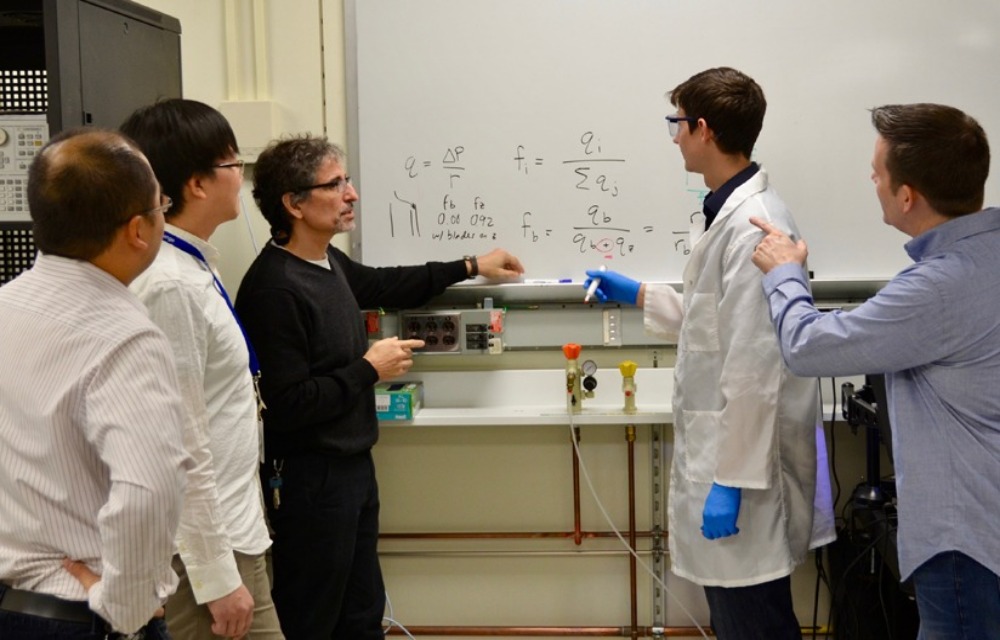
We have seen all kinds of algorithms being developed as part of the research conducted by scientists. Time and again, researchers have built machines or AI systems which create a human brain, sort of. Now, some researchers have actually tried to build an algorithm which should work exactly like a human brain. This is the process of mimicking a human brain where researchers develop an algorithm which thinks and acts like brain of a person.
According to the researchers, this biologically-feasible algorithm will be an alternate part for AI. This research was conducted by two IBM researchers, Dmitry Krotov and John J. Hopfield. They developed a set of algorithms and did not provide machine learning to them. Rather, the algorithms were made to learn in the same way as humans would which is in loose, unfettered way.
Talking about deep learning by machines, they learn things in a supervised manner. Whereas the humans are believed to learn things in an unsupervised manner and without any shortcuts. This is not a new field of research and scientists are trying to do this from 1980s and 90s. However, they did not get the results expected and the projects were abondoned until machine learning came into existence.
These IBM researchers, however, have adopted the old-school technique in a unique manner. They say that:
If we talk about real neurobiology, there are many important details of how it works: complicated biophysical mechanisms of neurotransmitter dynamics at synaptic junctions, existence of more than one type of cells, details of spiking activities of those cells, etc. In our work, we ignore most of these details. Instead, we adopt one principle that is known to exist in the biological neural networks: the idea of locality. Neurons interact with each other only in pairs.
In other words, our model is not an implementation of real biology, and in fact it is very far from the real biology, but rather it is a mathematical abstraction of biology to a single mathematical concept – locality.
From the early results, it is found out that biologically-feasible algorithm can operate within the same realm of accuracy and usability from the techniques which are present at the moment. This means that the results are not bad for a start and they should get better once the research is complete.
More in News

Was This Website Made With AI? Introducing the AI Website Detector
Today, this is becoming a very common question. You visit a website. It looks clean. The layout is modern. The colours are perfect. The sections are well aligned. There is a large heading, a gradient background, rounded cards, neat icons, client testimonials, and a strong call-to-action button. But then you start wondering: “Was this website…
Free AI Website Detector: Find Out If a Website Was Created by AI
Nowadays, we are seeing more websites created with artificial intelligence than ever before. A person can open an AI website builder, type a short prompt, choose a style, and generate a complete website within minutes. The result may include a homepage, navigation menu, call-to-action buttons, product cards, icons, illustrations, contact forms, responsive layouts, and even…

What I Do When Traffic Drops After a Google Update
A sudden drop in traffic right after a core update tends to trigger the same instinctive reaction in almost everyone: open a handful of blog posts and start rewriting sentences that didn’t need rewriting, just to feel like something productive is happening. It rarely helps, and it can occasionally make things worse. The far more…
The week in tech, minus the noise.
New reviews, fixes and the stories that matter — once a week, straight to your inbox.
We only use your email to send the newsletter. Unsubscribe any time. See our privacy policy.
Comments