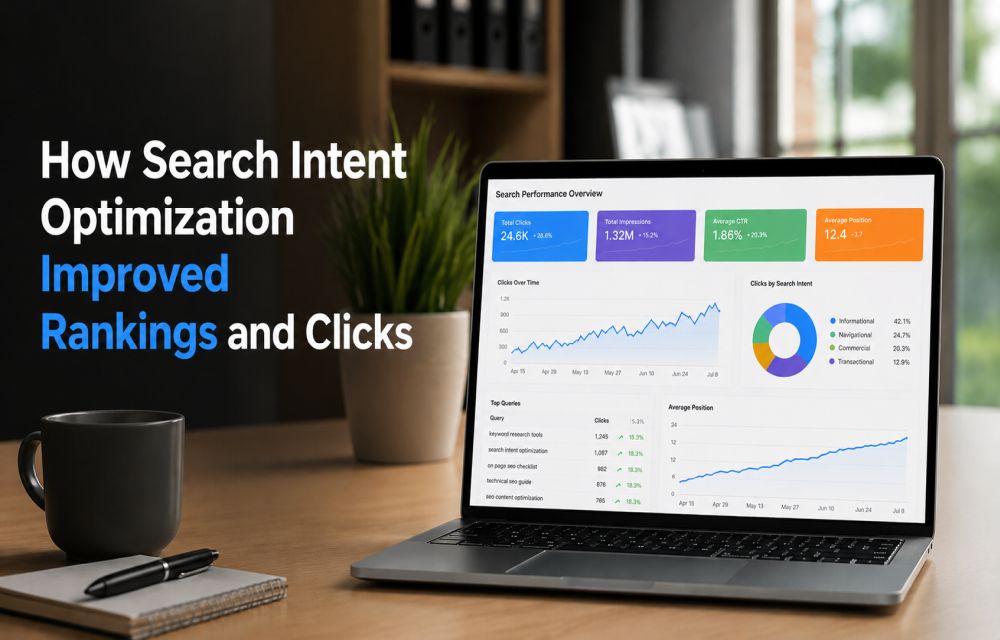
Search intent optimization is one of the most underrated reasons a page starts performing better in Google. A lot of sites publish content that targets the right keyword but still fails to rank well or earn clicks because the page does not match what the searcher actually wants. That mismatch is where traffic gets lost.
This case study-style article looks at how aligning content with search intent can improve rankings, CTR, and overall search visibility. The lesson is simple: when your page gives users exactly what they came for, Google has more reason to surface it and more users have a reason to click it.
What search intent really means
Search intent is the reason behind a query. Someone searching for “best SEO tools” wants a list and comparison. Someone searching for “how to fix iPhone Files app not showing recent downloads” wants a direct solution. Someone searching for “TheTechHacker” wants branded information about the site itself.
If the content format does not match the intent, rankings usually suffer. A tutorial article written for a comparison keyword, or a sales page trying to rank for an informational query, often gets ignored by both users and search engines. That is why intent alignment is now one of the most important parts of SEO.
The problem before optimization
A typical article may target a keyword with decent volume but still underperform. The title might be optimized, the page may be indexed, and the site may even have some authority. Still, impressions stay low and clicks remain weak.
This usually happens because of one or more of these issues:
-
The page answers the wrong question.
-
the content is too thin or too sales-focused.
-
the format does not match the SERP.
-
the introduction is too broad.
-
the page does not clearly solve the searcher’s problem.
In other words, the keyword is right, but the intent is wrong.
What changed
The content strategy changed from keyword-first writing to intent-first writing. Instead of asking, “What keyword should we target?” the process became, “What does the user really want when they search this?”
That shift led to better article structure, stronger relevance, and more useful content. Pages were rewritten to match the format that Google was already rewarding. Informational queries became guide-style posts. Comparison queries became listicles and side-by-side breakdowns. Troubleshooting queries became step-by-step fixes.
The result was a better experience for readers and a clearer signal to Google.
Case study approach
Let’s say a site had an article targeting a query like “best video editing software for Windows.” The original page may have been too generic, talking broadly about video editing without enough comparison or real recommendations. Even if the keyword was in place, the content did not fully satisfy the searcher.
After optimization, the page was rewritten to match commercial investigation intent. It included:
-
a direct intro.
-
a comparison table.
-
five to seven tools with clear use cases.
-
pros and cons.
-
pricing context.
-
a short conclusion.
-
a FAQ section.
That structure matched what people were looking for. Instead of forcing the reader to hunt for value, the page gave it immediately. Over time, that improved engagement and made the page more likely to earn clicks.
Another example is a troubleshooting article like “How to fix Windows search not working properly.” If that page starts with a long brand intro or unrelated SEO chatter, users bounce. But if it begins with the problem, provides a short diagnosis, then lists fixes in order of priority, the page becomes much more useful. Google notices that usefulness through engagement signals.
Examples of intent optimization
Here are a few simple examples of how intent changes content direction:
Example 1: Informational intent
Query: “What is E-E-A-T in SEO?”
Best format:
-
definition.
-
why it matters.
-
examples.
-
practical tips.
-
FAQ.
This is not a sales page. It is an explainer.
Example 2: Commercial intent
Query: “Semrush vs Ahrefs”
Best format:
-
comparison table.
-
feature-by-feature breakdown.
-
pricing.
-
best use cases.
-
final recommendation.
This is not a generic article. It is a decision-making page.
Example 3: Troubleshooting intent
Query: “Why is my iPhone Files app not showing recent downloads?”
Best format:
-
short explanation of possible causes.
-
quick fix table.
-
step-by-step solutions.
-
FAQ.
This is not a theory article. It is a fix-it guide.
Example 4: Branded intent
Query: “TheTechHacker advertising options”
Best format:
-
direct brand explanation.
-
service list.
-
pricing.
-
contact or proposal format.
This is not a long and broad blog post. It is a trust and conversion page.
Why clicks improved
Clicks improved because the content became more aligned with the search result page and the user’s mental goal. When the title promised one thing and the page delivered it quickly, users were more likely to click. When the meta description and headline reflected a clear solution, CTR improved.
Search intent optimization also helps snippets stand out. A title that mirrors the query naturally can attract attention. A description that answers the problem in plain language can earn the click over a competing result that sounds vague or overly technical.
In many cases, a page does not need more backlinks first. It needs a better match.
Why rankings improved
Rankings improved because Google tends to reward pages that satisfy users better. If a page gets more engagement, fewer people bounce, and readers find what they came for, that sends stronger quality signals. The page also becomes easier for search engines to classify.
When content is structured around intent, it often earns:
-
better reading time.
-
stronger relevance.
-
better CTR.
-
more internal linking opportunities.
-
more topical authority.
That combination helps rankings stabilize and grow.
TheTechHacker lesson
For TheTechHacker, search intent optimization fits perfectly because the brand covers a mix of tutorials, reviews, SEO, troubleshooting, software lists, and digital growth content. Each of these has different intent. A blog that understands that difference can scale much faster.
The real advantage is not just higher rankings. It is better reader satisfaction. When someone lands on a TheTechHacker article, they should feel the content was written for exactly that search. That is what builds trust, repeat visits, and stronger brand memory.
Practical takeaways
If you want to improve rankings and clicks through search intent optimization, focus on these points:
-
Study the current top results before writing.
-
Identify whether the intent is informational, commercial, navigational, or transactional.
-
Match the content format to the query.
-
Answer the main question early.
-
Use headings that guide the reader.
-
Include examples and FAQs where useful.
-
Keep the page focused on the user goal.
This method works because it does not fight Google’s direction. It works with it.
FAQ
What is search intent optimization?
Search intent optimization is the process of aligning your content with what users actually want when they search a keyword.
Why does search intent matter for SEO?
It matters because Google wants to show results that best satisfy the searcher. If your page does not match the intent, it is less likely to rank well.
How does intent affect clicks?
When the title, description, and content match the searcher’s goal, people are more likely to click your result.
Can intent optimization improve rankings without backlinks?
Yes, in many cases it can improve visibility and performance even before strong backlink growth happens.
What types of intent are most common?
The main types are informational, commercial, navigational, and transactional.
Is this useful for TheTechHacker content?
Yes. It is especially useful for tutorials, listicles, troubleshooting guides, SEO articles, and comparison posts.
Leave a Reply