

This AI Suitcase Developed By IBM Could Help Visually-Impaired People Travel
AI Suitcase Developed By IBM details: Coming to the story, IBM Japan and partnering companies are developing a new suitcase which is a robot that could help


Vison loss or visual impairment is a common problem across the globe. Without human guidance, a visually impaired person can’t travel with his/her own. There is a piece of good news for such people with the help of scientific advancement.
AI Suitcase Developed By IBM details
Coming to the story, IBM Japan and partnering companies are developing a new suitcase which is a robot that could help the visually impaired people while they travel.
The AI-enabled navigation robot will use artificial intelligence to help people travel more independently, whether that’s around town or around the world.
A small navigation robot will use the user’s location map data to identify the best route to their destination. Then it will guide them there through voice and haptic technology that transmits vibrations transmitted through the suitcase handle.
The suitcase also intimates the users about the cafes and other facilities are located nearby through an audio system that serves as eyes to the user.
The mastermind behind this idea is Chieko Asakawa, an IBM Japan employee who has vision problems came up with the idea of having an assisting suitcase with AI technology.
“It’s impossible for visually impaired individuals to walk around town alone freely and safely,” Asakawa said. “I want to make that possible.
The researchers had used the help of 10 visually impaired people to evaluate CaBot the product and feedback on the features like walking speed and haptics in the handle that conveys directional feedback.
“We found that CaBot’s performance highly exceeded users’ expectations, who often compared it to navigating with a guide dog or sighted guide,” researchers with Carnegie Mellon’s Robotics Institute said in a report.
The group is currently conducting pilot experiments to identify the requirements for a prototype device, which will be opened to the public in June 2020 at a commercial complex in Tokyo.
After the successful pilot, the company is planning to launch the suitcase commercially out in airports and other indoor facilities.
More in News
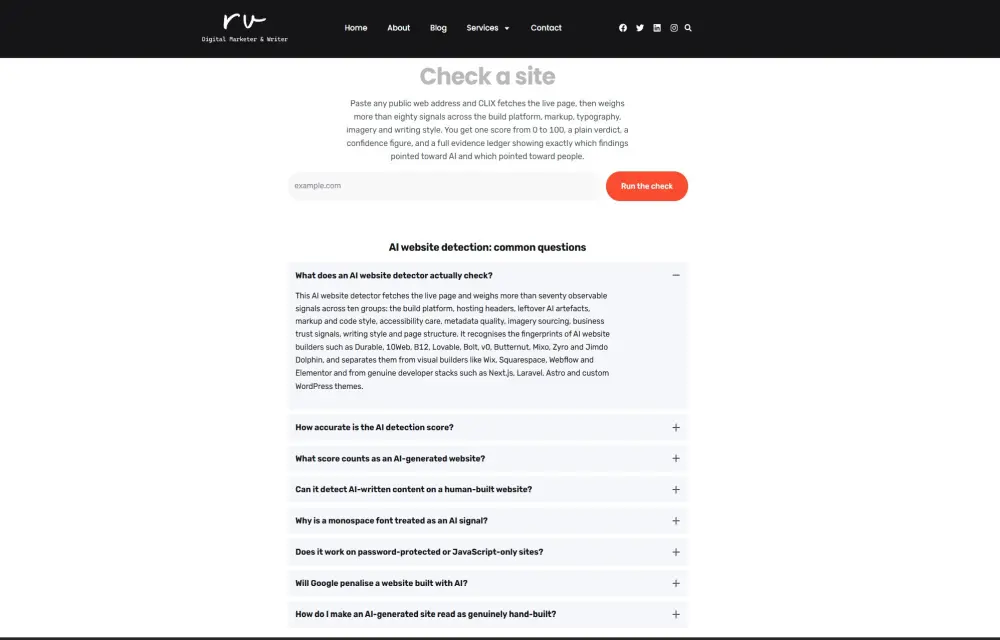
Free AI Website Detector: Find Out If a Website Was Created by AI
Nowadays, we are seeing more websites created with artificial intelligence than ever before. A person can open an AI website builder, type a short prompt, choose a style, and generate a complete website within minutes. The result may include a homepage, navigation menu, call-to-action buttons, product cards, icons, illustrations, contact forms, responsive layouts, and even…
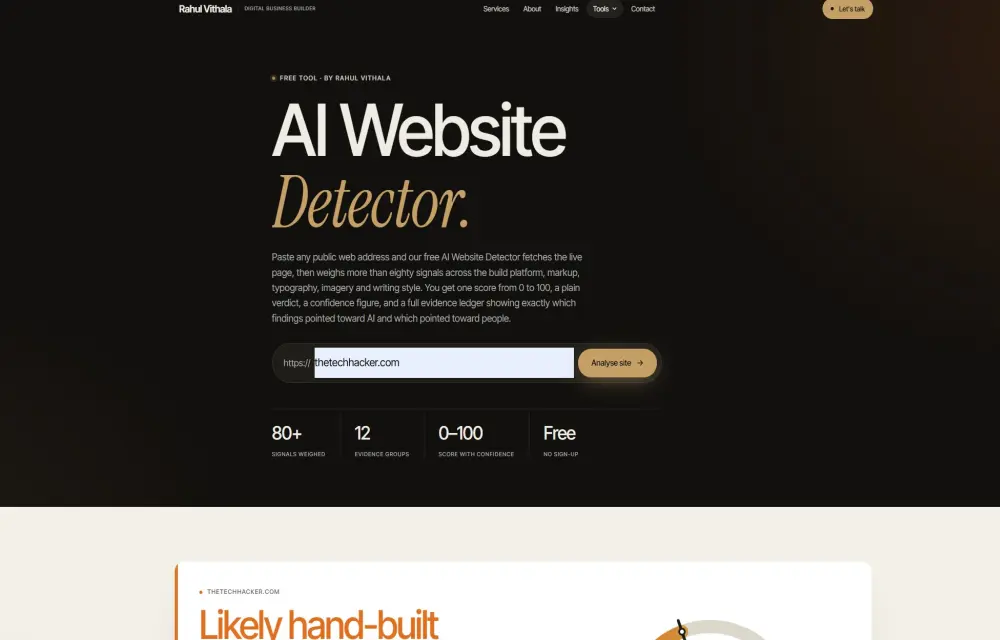
Was This Website Made With AI? Introducing the AI Website Detector
Today, this is becoming a very common question. You visit a website. It looks clean. The layout is modern. The colours are perfect. The sections are well aligned. There is a large heading, a gradient background, rounded cards, neat icons, client testimonials, and a strong call-to-action button. But then you start wondering: “Was this website…

OpenAI Adds Tougher ChatGPT Penalties to Stop Child Exploitation, Releases Free Detection Tool
ChatGPT now warns, deletes the chat and pauses access for 24 hours when someone seeks child abuse material. OpenAI also released a free detection classifier.
The week in tech, minus the noise.
New reviews, fixes and the stories that matter — once a week, straight to your inbox.
We only use your email to send the newsletter. Unsubscribe any time. See our privacy policy.
Comments