Writing a newsletter is like leaving a note on someone’s kitchen counter every week. Most notes get glanced at and tossed. A few, written by the right person with the right thing to say, become the note someone actually looks forward to finding. The difference has almost nothing to do with design templates or subject line tricks – it comes down to whether the note was actually worth writing in the first place. Where This Idea Actually Came From Rewind to the early 2000s – email newsletters were mostly corporate: mailing lists blasting promotions, press releases dressed up as updates, unsubscribe links buried in size-6 font. Nobody looked forward to them. Then blogs matured into something more personal through the 2000s and 2010s, and a handful of independent writers started treating email less like a marketing channel and more like a direct line to a reader’s actual attention.
Substack showed up in 2017 and made that direct relationship the whole business model – readers paying not for a platform, but for a specific person’s specific way of seeing things, delivered straight to an inbox instead of buried in a feed. By the 2020s, newsletters had quietly become one of the few places online that still felt personal – no algorithm deciding who sees it, no feed competing for attention mid-scroll, just a reader who chose, at some point, to let this particular voice into their inbox on purpose. That’s a strange kind of trust, and most newsletters squander it within three sends by forgetting it was ever given. Unlike social media, email gives you direct access to an audience that has chosen to hear from you.
A Great Newsletter Feels Like a Conversation
The word “newsletter” sounds administrative, like a PTA update or a corporate HR memo. What a genuinely good one actually does is closer to a standing coffee chat – the reader already knows, roughly, what kind of thing they’ll get, and they’ve built enough trust to keep showing up without needing to be convinced each time. Like a favorite radio show that’s always on around the same time, the format becomes part of a habit before the reader even consciously notices they’ve formed one.
The Three Pillars of Every Great Newsletter
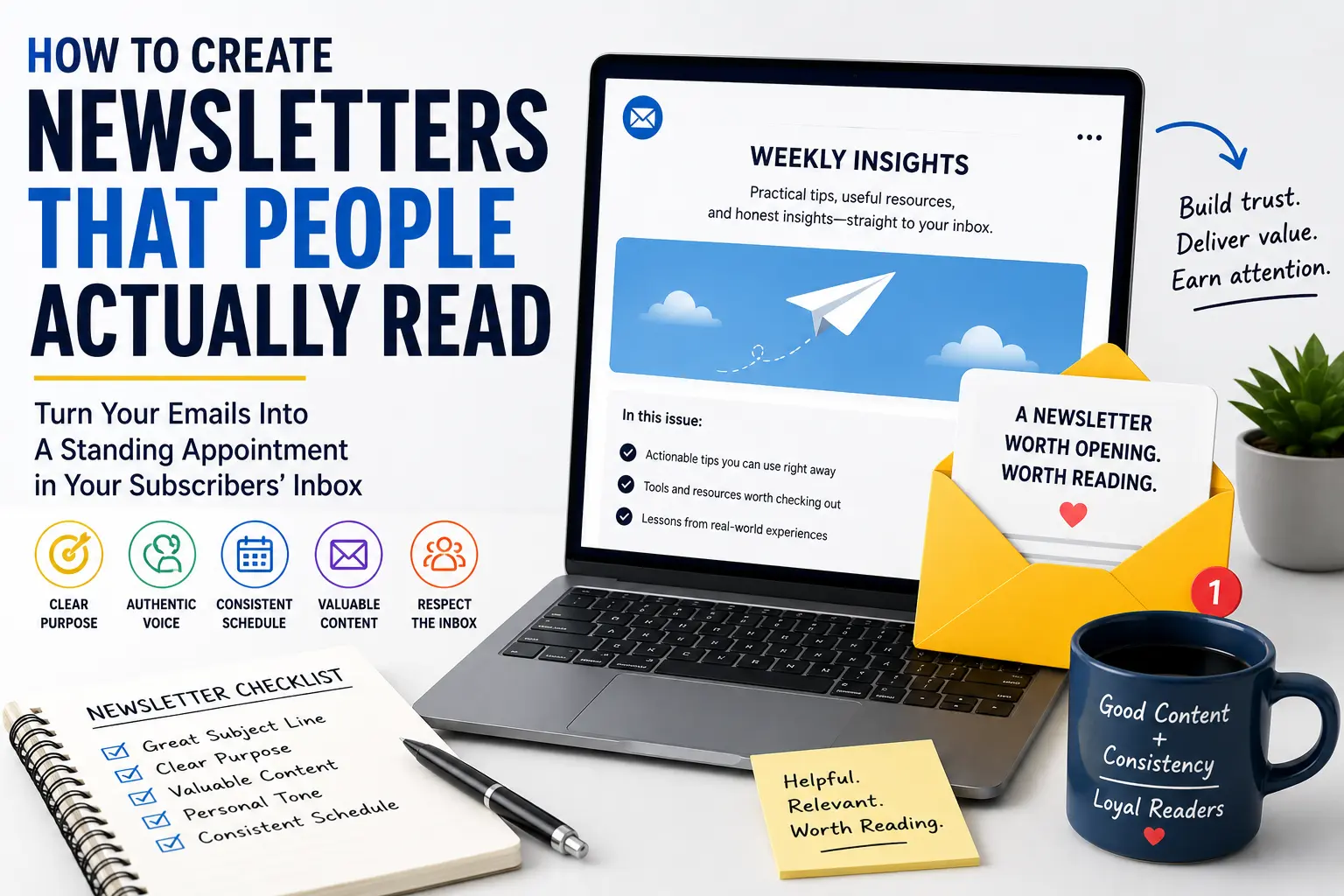
Every newsletter that people genuinely open, read, and miss when it’s late rests on the same three pillars: A Clear Promise – the reader knows exactly what they’re signing up for, and every issue delivers on that specific promise instead of drifting. A Recognizable Voice – writing that sounds like an actual person with actual opinions, not a brand trying not to offend anyone. Respect for the Inbox – showing up on a schedule the reader can predict, and never treating the send button as free just because it’s cheap.
Subscribers feel misled when your newsletter fails to deliver on its promise. A weak or generic voice quickly makes it forgettable. Sending too often or without purpose can eventually drive readers to unsubscribe.
Newsletters in Everyday Life
One honest, personal observation at the beginning of each issue helps readers feel they’re hearing from a person rather than a mailing list. Delivering every newsletter on the same day each week creates a habit readers naturally anticipate. Limiting each issue to a few focused sections instead of overwhelming readers with endless content shows respect for their time and strengthens trust over the long term.
Here’s where that trust tends to get built or lost, issue by issue:
| Element | What It’s Actually Doing |
| Subject Line | Earning the open, without resorting to a bait-and-switch |
| Opening Line | Confirming the promise before the reader decides to bail |
| Length | Matching how much time the reader actually has, not how much the writer wants to say |
| Voice | Making it feel like one person wrote this, not a committee Send |
| Schedule | Building a habit instead of an unpredictable surprise |
Start with one clear purpose
Every newsletter should have one main goal. That goal might be to educate readers, drive traffic, build trust, promote a product, or nurture leads — but it should not be all of those at once. Before writing, ask yourself:
What is the one thing readers should take away?
What action should they take after reading?
Why should they care right now?
When one issue tries to do too much, the message becomes forgettable. When it has one clear purpose, it feels focused and easier to read.
Write a subject line people want to open
The subject line is your first gatekeeper. It should be specific, honest, and interesting enough to earn the open without sounding clickbait-heavy.
Good subject lines usually do one of these things:
Promise a clear benefit.
- Create curiosity.
- Use specificity.
- Signal urgency or timeliness.
- Match the reader’s real interest.
Examples:
- 5 email mistakes costing you readers
- How I’d build a newsletter from zero
- The simplest way to improve open rates
- A better way to write your next issue
Keep the subject line short enough to work well on mobile, and make sure it matches the actual content of the email.
Common Newsletter Mistakes
Examples
- Sending only promotions
- No personality
- Five CTAs
- Huge paragraphs
- Inconsistent schedule
- Generic subject lines
- No value
Checklist for best Newsletter
To make things easy, here is the checklist:
- Subject line
- Preview text
- One purpose
- Mobile tested
- CTA
- Links checked
- Images compressed
- Grammar checked
- Personal tone
- Schedule maintained
The newsletters people remember aren’t always the most beautifully designed or the longest. They’re the ones that consistently deliver useful ideas, sound like a real person, and respect the reader’s time. When every email provides genuine value, your newsletter becomes something subscribers look forward to instead of another unread message in their inbox.
Leave a Reply