

Optimizely Hack Planted Malicious Code on Sites of 178 Organizations, Including CNN and Zoom
Optimizely says attackers abused a flaw to add malicious code to customer sites on Nov 16. What happened, which brands were hit and what to do now.


Optimizely, a website testing service used by large brands, says an attacker exploited a flaw in its Web Experimentation product and used it to plant malicious code on some customers’ websites. The company said early on November 17, 2026, that it had contained the incident, removed the injected code and contacted affected customers. An independent security researcher who tracked the attack found the code on sites belonging to 178 organizations, including well-known names such as CNN, Zoom and the BBC.
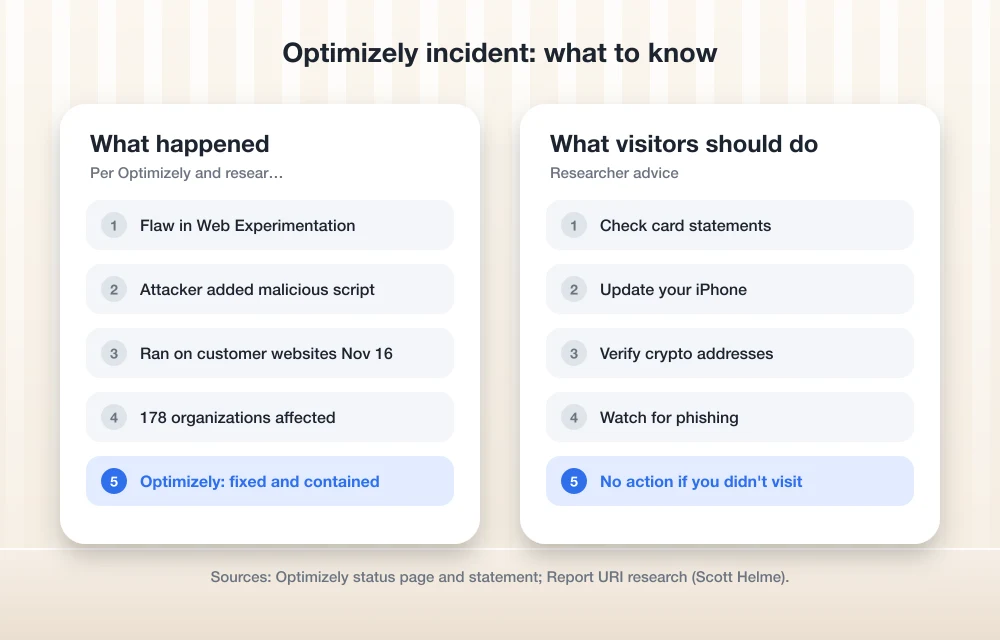
Quick answer: On November 16, attackers abused a vulnerability in Optimizely Web Experimentation to add malicious JavaScript to some customer sites. Optimizely says the flaw is fixed and the code removed. If you visited a major brand’s website that day and entered card details, watch your statements, update your iPhone, and double-check any crypto address before you send funds.
What Optimizely said
In a statement on X, Optimizely said it “identified and contained a security incident affecting some Optimizely Web Experimentation customers.” The company said “the vulnerable path is blocked, the injected code was removed, and customers have been contacted directly.”
Its status page adds that “an unauthorized party exploited a vulnerability in Experimentation and used it to add malicious JavaScript to some customer projects.” Optimizely says it has fixed the vulnerability, secured affected user accounts and added protections to stop unauthorized code from being delivered. As of November 17, the incident was listed as “Monitoring.”
Optimizely has not said how many customers were affected or how the attacker gained access.
How big was it?
Security researcher Scott Helme of Report URI published the most detailed account. He checked 1,611 Optimizely code snippets and found 188 carrying the malicious code, belonging to 178 organizations. He said the first injection appeared at 04:21 UTC on November 16 and most snippets were clean by that evening.
Brands he named include Zoom, the BBC, CNN, Salesforce, GitLab, IKEA, HSBC, Equifax and Peacock. Being on that list means a site’s Optimizely code carried the malicious script during the window. It does not mean those companies confirmed any customer data was taken, and none had published a statement as of November 17.
What the code tried to do
According to Helme’s analysis, the injected script:
- Swapped cryptocurrency wallet addresses for the attacker’s.
- Captured card details typed into forms on the page.
- Stole browser cookies and screenshots.
- Tried to deliver exploit kits to iPhones and iPads.
Because the code was served from Optimizely’s own trusted network, browsers treated it like any other part of the site, which is what made this kind of supply chain attack hard to spot.
What you should do
- Check your card statements if you paid on a large brand’s website on November 16, and report anything unfamiliar to your bank.
- Update your iPhone or iPad. Running the latest iOS closes known holes. Our iOS 27.2.1 guide covers the newest security fixes.
- Verify crypto addresses character by character before sending funds.
- Be wary of follow-up phishing. Big incidents bring fake “security alert” emails, the same pattern seen after this week’s Chase outage.
Not every scary headline is real. Rumors of a coordinated cyber attack on November 17 did not hold up, and the nationwide emergency alert test that day was routine.
FAQs
Was there a cyber attack on November 16 or 17, 2026?
Optimizely confirmed that attackers abused a flaw in its Web Experimentation product on November 16 to add malicious code to some customer websites. The company says it has contained the incident.
Which websites were affected by the Optimizely attack?
A security researcher found the code on sites of 178 organizations, naming brands including Zoom, the BBC and CNN. Optimizely has not published a list.
Should I change my passwords?
Researchers say the code stole cookies, so signing out and back in on sites you used that day is a reasonable precaution. Watch card statements and update your phone.
Is it safe to visit those websites now?
Optimizely says the injected code has been removed and the vulnerable path is blocked.
Featured image: Tyler on Unsplash.
Disclosure: TheTechHacker has no paid relationship with Optimizely or any company mentioned here.
More in News

How To Test a WordPress Plugin Security and Performance
Ensure your WordPress plugins are secure and don’t slow down your site with this guide.

Unlock the World of Omegle with These Top 10 Proxy Sites
Do you want to experience Omegle’s broad and engaging community but are limited by geographical restrictions? Not to fret! In this post, we go deeper into the world of Omegle proxy sites, giving you with a hand-picked list of the best ten proxy services that will allow you to unblock and access Omegle from anywhere…

NSA Down: Agency’s Classified NSA Net Goes Offline, No Sign of Cyberattack, Sources Say
The NSA's classified internal network went offline Nov 17, sources say, with no sign of a cyberattack. What happened, the likely cause and what it means.
The week in tech, minus the noise.
New reviews, fixes and the stories that matter — once a week, straight to your inbox.
We only use your email to send the newsletter. Unsubscribe any time. See our privacy policy.
Comments