

Black Friday 2026 Scams: How to Spot Fake Stores, Deal Texts and Delivery Phishing
Black Friday is November 27, and scammers are ready for it. The FTC says fake package delivery texts were the most-reported text scam of 2024, with total text-scam losses reaching $470 million. This year, scammers are also using AI to build convincing fake stores and deal ads, Money.com reports. The Identity Theft Resource Center warns…
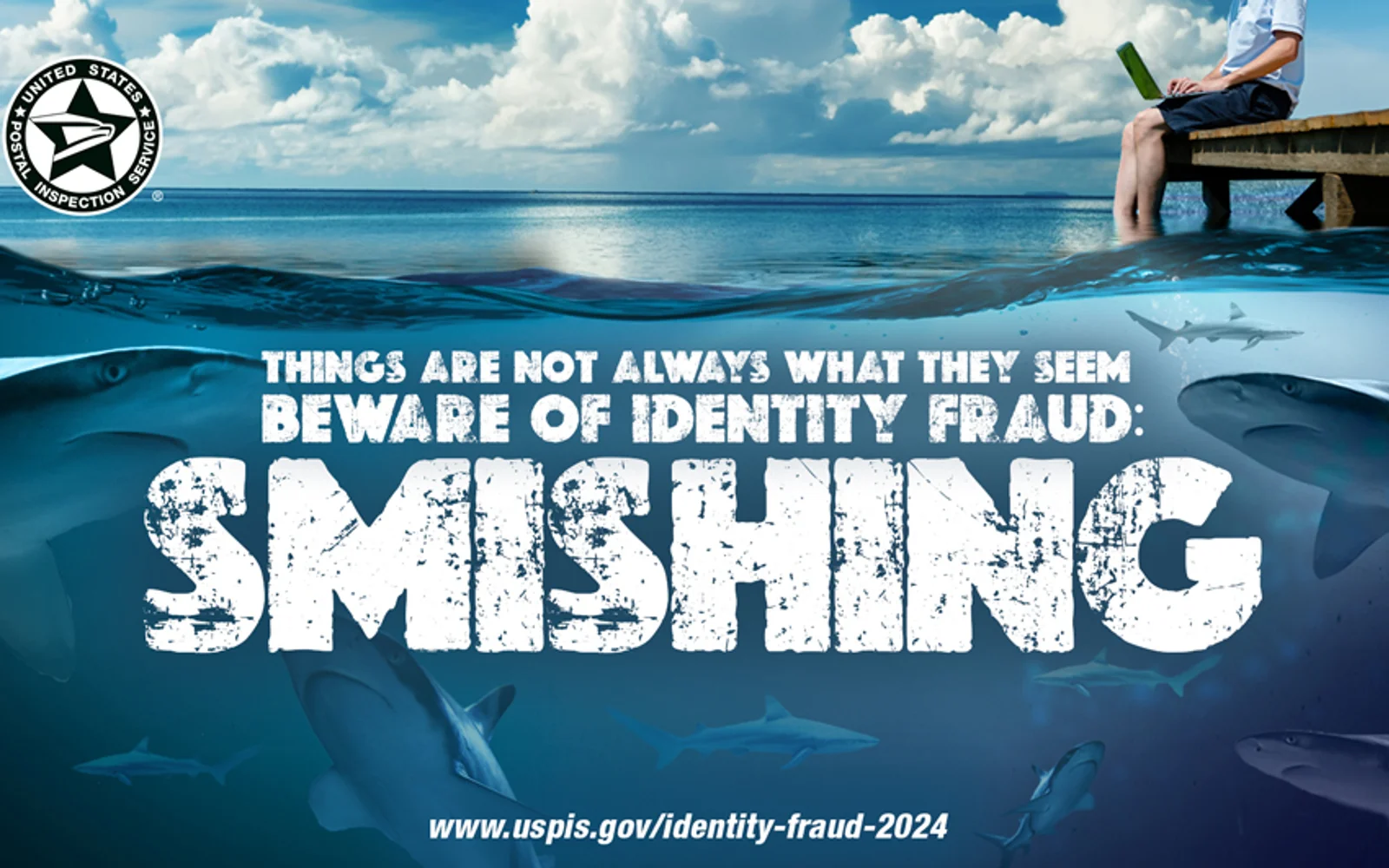
Image: USPS
Black Friday is November 27, and scammers are ready for it. The FTC says fake package delivery texts were the most-reported text scam of 2024, with total text-scam losses reaching $470 million. This year, scammers are also using AI to build convincing fake stores and deal ads, Money.com reports. The Identity Theft Resource Center warns that AI shopping assistants can pick an unfamiliar retailer without checking it. This guide shows how to spot the most common Black Friday scams, check a store before you pay, and what to do if you’ve already been caught.
Quick answer: The biggest Black Friday scams are fake stores with prices that are too good to be true, delivery texts about a “package on hold,” fake deal ads on social media, and gift card payment requests. Check unfamiliar stores before buying, and pay with a credit card, never Zelle, wire transfer or gift cards. Don’t tap links in delivery texts; go to the carrier’s site or app yourself. Forward scam texts to 7726 and report scams at ReportFraud.ftc.gov. If you paid a scammer, call your card issuer or bank right away.
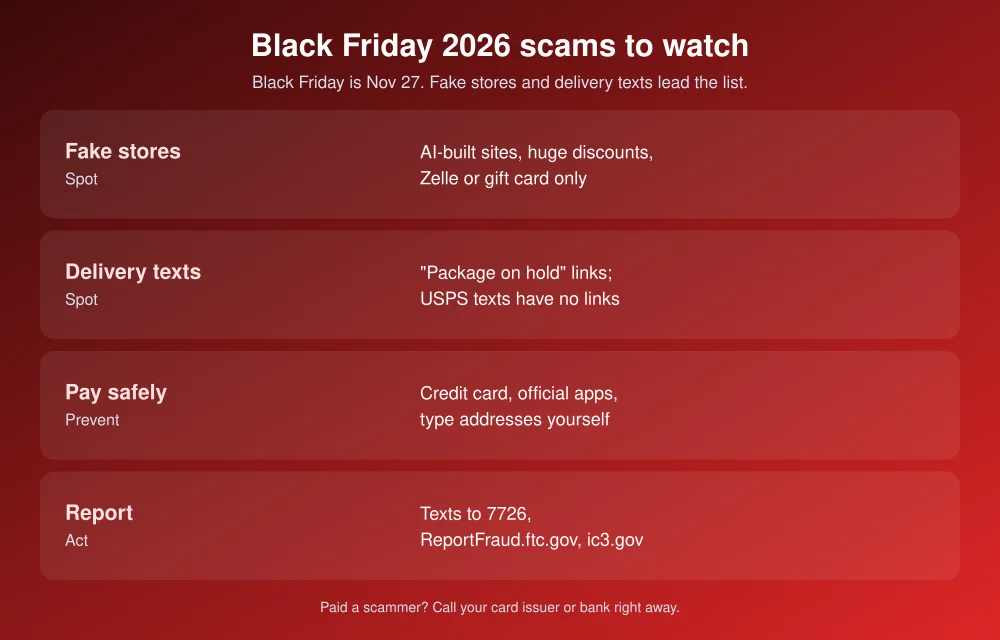
The most common Black Friday scams
1. Fake online stores
Scam sites copy real brands or invent new ones, often with huge discounts on popular gifts. Generative AI makes their product photos, descriptions and reviews look more professional than before. Warning signs:
- Prices far below every other retailer.
- A web address that’s slightly off, such as extra words or an unusual ending.
- No real contact details, return policy or company address.
- Payment only by Zelle, wire transfer, crypto or gift cards.
2. Package delivery texts
A text says your package couldn’t be delivered and asks you to update your address or pay a small fee. The US Postal Inspection Service says USPS doesn’t send texts you didn’t sign up for, and its tracking texts contain no links. Check deliveries in the carrier’s app or by typing its website yourself.
3. Fake deal ads on social media
Sponsored posts for big-name products at impossible prices lead to fake checkout pages. Before buying, search the store’s name plus “scam” or “reviews,” and check the BBB Scam Tracker.
4. AI shopping agents buying from the wrong store
Deloitte data cited by Money.com says 16% of shoppers would let AI complete a purchase. ITRC’s Eva Velasquez warns an agent may choose a retailer you’ve never heard of without vetting it. Review the store before letting any AI tool check out for you, and don’t link your bank account to a chatbot.
5. Gift card and “verify your account” scams
No real retailer, bank or government agency asks you to pay with gift cards. Calls or emails saying your Amazon, Apple or bank account is locked and needs a payment or code are scams. Hang up and use the official app.
How to shop safely this Black Friday
- Shop with stores you know, or check new ones first.
- Type web addresses yourself or use the official app instead of tapping ad or text links.
- Pay with a credit card, which gives you the strongest dispute rights.
- Turn on transaction alerts in your card or bank app.
- Track real deals with tools we trust. See how to track price drops before Cyber Monday and the Black Friday 2026 sale dates.
How to report a scam
From the FTC’s spam text guide and the FBI:
- Scam texts: forward them to 7726 (SPAM) and use your phone’s Report Junk option.
- Fraud and fake stores: report at ReportFraud.ftc.gov.
- Online crime with losses: file with the FBI at ic3.gov.
- Fake USPS texts: email a screenshot showing the sender and date to [email protected].
What to do if you already paid
- Credit or debit card: call the number on your card and dispute the charge.
- Zelle or bank transfer: call your bank immediately and ask it to reverse the payment.
- Payment app: report it in the app. The FTC notes these payments work like cash and are hard to recover.
- Shared personal info: if you gave out your Social Security number, go to IdentityTheft.gov.
- Clicked a link: change passwords for any accounts you logged into. Follow our data breach checklist.
If a scary “your PC is infected” pop-up appears while you shop, see our fix for tech support scam pop-ups.
FAQs
How can I tell if a Black Friday deal is a scam?
Be wary of prices far below other stores, misspelled web addresses, no contact or return details, and sites that only take Zelle, wire transfers, crypto or gift cards.
Are package delivery texts real?
Some are, but many are scams. The Postal Inspection Service says USPS doesn’t send texts unless you signed up, and its texts contain no links. Check deliveries in the carrier’s app.
Where do I report a Black Friday scam?
Report it at ReportFraud.ftc.gov, forward scam texts to 7726, and file losses with the FBI at ic3.gov.
Can I get my money back from a scam?
Credit card payments are the easiest to dispute, so call your issuer right away. For Zelle or bank transfers, contact your bank immediately. Recovery isn’t guaranteed.
Featured image: USPS.
Disclosure: TheTechHacker has no paid relationship with any retailer, carrier or agency mentioned here.
More in Guides
How to Check If an Online Store Is Legit Before You Buy on Black Friday
Black Friday is November 27, and fake online stores are already running ads. They look like real shops, with polished product photos, AI-written descriptions, five-star reviews and prices that are hard to ignore. You pay, and the order never arrives, or a cheap knockoff does. Most fake stores share the same warning signs, and checking…
How to Track Black Friday Price Drops and Spot Fake Discounts (Google, Chrome, Amazon)
Every Black Friday listing says “deal,” but plenty of them aren’t. A TV marked “$300 off” might have sold at the sale price for months, and a “was” price can come from a list price almost nobody paid. The good news is you don’t need a browser extension or a spreadsheet to see through it.…
Black Friday 2026 Tech Deals: Sale Dates at Amazon, Best Buy and Walmart
Black Friday 2026 is on Friday, November 27, but the big tech sales have already started. Amazon and Best Buy both launched their main Black Friday events on November 19, and Walmart’s starts online on November 23. Here are the official dates for each retailer, when the best tech deals drop, and how to make…
The week in tech, minus the noise.
New reviews, fixes and the stories that matter — once a week, straight to your inbox.
We only use your email to send the newsletter. Unsubscribe any time. See our privacy policy.
Comments